Pages

Nov 20, 2014

Ode to Inbox

I would cringe every time I saw or heard a new email notification come in. 80% of the time it represented a waste of my time. I often leave my phone's sound off because of this, but Google Inbox is changing that.

Dear Inbox, how do I love thee? Let me enumerate the ways.

You're Incredibly Social

Inbox presents your email in social media style. It changes your email from a boring monotonous list, to a preview of people, attachments, and message types. I never realized before how wrong the chronological view is for message listing. This social media view is much more conversational, relevant, and let me just say that yes, it is very pretty.

How You Handle My Attachment

Inbox, I have an unhealthy attachment to you because of the way you handle attachments. Attachments are a pain, aren't they? And forget trying to find a particular one in a message. With Inbox, all attachments are shown upfront in a compact, easy scrolling list. This includes not just images, but previews of links in messages, and audio files shown in Facebook style. It also doesn't seem to show those annoying signature file attachments...which is ALWAYS annoying.

The Way You Bundle Me Up

Bundles group messages that are alike together. There are a lot of default bundles such as promotions, notifications, purchases. These are moderately useful, and by default, they are set to not trigger a phone alert when a message of these types come in. Which...is awesome. Bundles are good for organization of messages, but their most powerful use is deciding which messages alert you, and which don't. My most spammy offenders, people and school who send several trivial emails a day, now get custom bundles, and that bundle no longer chirps for my attention with notifications, pulling me away from work.

An Archive By Any Other Name

I have always been angered by Gmail's archive feature and its insistence on being used. Swiping actions would result in archiving instead of something more useful, and then I never could find my message if it was accidentally archived. It's one of the 2 main reasons I have always felt Gmail to be inferior to all other email. However, marking an email as "Done" in Inbox makes sense to me, and it's essentially the archive feature. Making the "Done" list easily accessible, combined with bundling, makes me feel confident I can find that "Done" email again if I need to. The purpose of marking a message as such is to help achieve a concept called Inbox Zero. This concept was not invented by Google, but it now seems possible to have my inbox stay empty except for only the most recent or relevant messages.

You Have Impeccable Timing

I love being able to tell a message to alert me later if I can't deal with it now, or swipe it away if I am done reading and don't need to reply (without deleting it). I use Google Keep for my reminders, but for the people who don't have or use Keep, it's nice to have the ability to create reminders in your email (something that you already use every day).

You're Part of Everything I Do

Integration with Google Now and Google Calendar is sooo sweet. It auto-maps out locations and appointments for me, it tells me when I need to leave to get there on time (yes, including traffic), it pops up the notifications at the right times. It’s a great little personal assistant. I can't even describe how great this integration is, you just have to experience it over time and see for yourself.

You're Easy To Work With

By now you might be saying, "That's all great, but Gmail already does most of this." And it's true, if you're a Gmail power user, you know that Done = Archive, Bundles = folders, labels, and message rules. However, there are a lot of options that didn't exist, and now they are made easy for the everyday person to use. That in itself is a form of genius. Pack your software full of features, but if you have to be a power user to use them? Useless.

You're Willing to Improve

Inbox is not without its flaws, and it's still in beta testing mode. Here are some things I'd like to see changed.
  • Support for multiple email services (this should lead Inbox to dominate all other email!)
  • Reminders system (Galaxy S3 has a better interface)
  • Select All in bundles (when bundle is open) and in email searches
  • The ability to add existing unbundled messages of bundle type to newly created bundles.
  • At least one of my friends had a difficult time understanding the concept of bundles, how to use them, and how they could be useful.
  • PLEASE do this to my SMS/MMS (Google Voice! and Hangouts).


Have you used Google Inbox? What do you think? Tell me how you really feel in the comments!

Oct 30, 2014

Strangers of Significance

These are people who don't know me, but have had significant influence in my life. Perhaps in seeing some of their work, you may also be inspired by these outstanding individuals.

The Influence of Space and Time

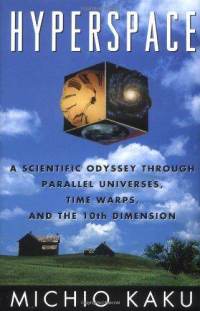
Michio Kaku is one of my first major influences, my physics rock star. He wrote Hyperspace, which explained theories of spacetime and multiple dimension theory in an understandable way. Though Madeleine L'Engle's A Wrinkle in Time was the gateway that nudged me to explore impossible things, Michio Kaku was the author of my confidence to explore complex matters normally reserved for geniuses. Though my perspective on these topics has changed greatly since this book, I would still highly recommend it to anyone who wants a stepping stone to exploring the possibilities of the world around us.


Nature's Creator

Andy Goldsworthy doesn't paint with acrylics or oils, he paints with leaves, icicles, twigs, mud, stones, holes, balance, and pressure. He paints with nature itself. Using only what he has around him, his work may only last a few hours, or mere minutes. Taken by tide, melted, windblown, eroded, the most lasting impression of his work may be a photograph, if he chooses to make one. Understanding that his works are made entirely with nature's materials makes it all the more impressive. Extremely simple, yet stunning; incredibly complex, yet temporary. What makes his work most striking is the clear organization amongst chaotic surroundings. Seeing how long they last is part of the experiment. The relationship of stability and permanence of his works is great fodder for meditation.

His creations show how simple reorganizations will give rise to objects of awe. It is of a genius easily passed by casual onlookers. The depth, intensity, and patience in his work is extraordinary.


I highly encourage you to check out a gallery of his work here to see what may strike you.


Rethink

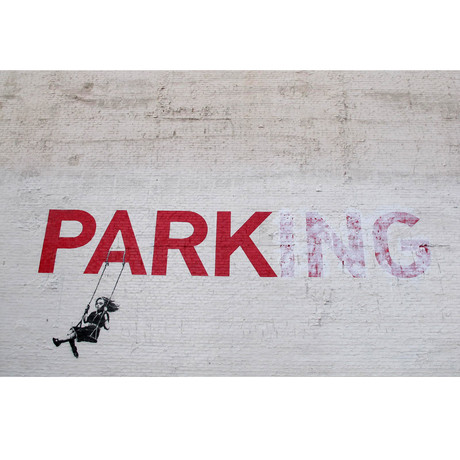
Social commentary, irony, freedom, societal introspection. These are the topics and conveyances in much of Banksy's art. It lays bare the conflict between society, its citizens, and its keepers. The cracks in our structure that we'd be all too comfortable to ignore. These are made open to ponder, if we don't mind being uncomfortable for a few moments. Mostly, it should give cause to rethink. His methods influenced by Warhol and graffiti, his meanings influenced by internal compass. Banksy is the Batman of art. He is a street artist who kept a necessary secret identity, all the while posing as a playboy benefactor.


Check out a gallery of his work here to see if there's anything that doesn't strike you.


Where the Heck is Matt?

A regular guy with ideals and ideas. Matt Harding was tired of his routine as a video game engineer. He "didn't want to spend two years of my life writing a game about killing everyone," so he quit his job and began traveling. A friend asked him to dance a jig once while filming, and the dance went on to each place he visited. As you will see in the videos, it became much more than that.
Dance with it in full screen!
I may or may not tear up a wee bit watching this video. There are contrasts, and commonalities. It shows things that bring people together no matter what. Be it differences in culture, race, politics, religion, economic standing, education, there are things we appreciate across all of these. Joy, dances, smiles, laughter. These give us hope, and can bind us together in trying times.

What else can we learn from Matt? Well...maybe you only do one thing well. Maybe it seems insignificant like dancing, reading, cooking, charades, or blogging. Just keep doing it. Evolve it. Though you may never be world renowned, you may find a way to bring joy to someone, and with any luck, you could bring joy to many someones.


My inspirations are based on what I take from their efforts. Are you familiar with any of these strangers of significance? If so, what did you take from their work?


Oct 20, 2014

New Media Techniques

Web and mobile media aren't new, but its creators are still new in adjusting to the techniques that work well with it. New media benefits from the lessons of media that came before, yet not all of the old lessons apply in the same way.

The Fold

The fold is a concept that came from newspapers, and was applied to websites heavily when there used to be (briefly) a common monitor size. With mobile and HD aspect ratios, that concept is obliterated. People expect to scroll web pages, and "the fold" is no longer the barrier it was to your content. So make web pages that scroll vertically, but make it obvious that they do. Some designers will say the fold is an outdated concept, but this is not true. Many people will still be fooled by a web page that appears to contain all of its information in a neat manner above the fold. If you need proof, perform some user testing, or use Google Analytics, which provides information on what your viewers are seeing and clicking.

Horizontal Scrolling

Horizontal scrolling is still one of the web’s 7 deadly sins. Mobile, not so bad, it just has to be extremely evident that you can scroll horizontally. 'Nuff said.

White Space

This is in an age old battle between content delivery practitioners and layout designers. Most people will want to pack "everything important" above the fold. Good design with white space is best for getting your main message out. Use it to entice your audience to look into more details, or perform your content goals. Prioritized, arranged in a pleasing manner, and free of distraction, white space will make visitors pay attention to your message.

Wireframes

Wireframes are an indispensable part of efficiently creating well structured web and mobile media. One of my favorite tools for this is Balsamiq. It does a great favor to your layout designers by keeping the layout visibly unfinished, indicating a work in progress. However, Blasamiq has an option that allows you to clean up your layouts by turning all of those drawn lines into straight lines. Instant polish for those times when you need it. The interface is very easy to use, and very capable of filling most of your web and mobile needs.

Mock-ups

Simply coloring in the wireframe boxes, slapping in some icons, and calling it a day is a mistake. As a layout designer, you may think your job has been done for you when delivered a wireframe, or after creating one yourself. Your true task is to now go beyond the wireframe. Think beyond the boxes, while living within the guidelines. Add some real design to the product. This is your time to shine, discover what you can add to the process, add some life and appeal.

Prototype

A favorite tool of mine for prototyping is Justinmind. It allows functional mobile and web wireframes in higher polish without being too complex, and without letting design details get in the way. Justinmind is a great way to test out your UX flow with both your team and outside testers. I recommend creating in this stage without adding color or full design details. That’s a process that can be done concurrently in the Mock-up process.

Warning 1: You could create your wireframes in Justinmind to shorten the entire process from wireframe to prototype. However, the UI of Justinmind is not intuitive at times, and sometimes performs opposite your expectations. Since a lot of iteration can occur during the wireframe phase, I still recommend Balsamiq, due to ease of use.

Warning 2: Prototypes are best when "thrown away" after approval. Creating a prototype in your final language (HTML, C++, JavaScript, Java, etc.) is the best way to ensure that bad code gets introduced into your final product before it’s even started. Often prototypes are rushed and not a lot of forethought goes into the code that creates them (as it shouldn't). Justinmind removes the risk of bad code becoming the groundwork for your project.

Justify and break the rules

Some of these concepts are abstract to describe, even if we know and live them by heart. In the field, we often have to justify our decisions. Weenudge is an interesting site to help you formulate your reasoning for your design decisions. Experience will show us that every rule has a time to be broken, but we must know those rules first, and then break them responsibly.


Do you know of any other great tools for these purposes? Are there other rules in new media that people are abusing or not using? Let me know in the comments!

Sep 26, 2014

Transformative Materials

Welcome to the first post of Actuator. I intend for this blog to be informational, inspirational, and to encourage discovery. That said, I can think of no better way to start than to introduce two books which were recently transformative to my quality of life. Perhaps they can eventually have the same effect for you.

What is Essential

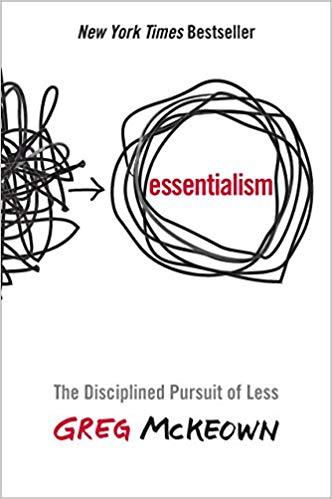
Essentialism (by Greg McKeown) is a book which focuses on you. It's about how to focus your life amidst the plethora of distractions and influences that keep you from what you truly want to be doing in your life. I'd been in a slow pursuit of a life of "less things, more simplicity" for some time, making progress, but never quite getting there. This book opened the door to that path, then tore the door off its hinges! Over time and practice, the advice of essentialism has provided me with freedom from entrapments that were taking up my most valuable resources...my time, and my attention. It helped me pursue the "less but better" approach to life, which, with so many wonderful things to pursue, seems like the way to go. Perhaps this quote can summarize the book, "listen carefully, edit brutally, and never underestimate the power of sleep, play, and making the time and space to escape."

For each reason you don't have enough time to read Essentialism, it's that much more important that you do read it. Take away some news, cell phone, Facebook, or web time, and sit down with this.

The Roots of a Society

After you've found some time for yourself from reading Essentialism, a good companion might be Think on These Things (by Jiddu Krishnamurti). This book encourages us to take the time to do exactly what the title says. Consider what we haven't considered before, or see things in ways that were previously unknown. This reads both as very refreshing, and an unexpected take on how to think about the world.

The first chapter is on education, providing a fantastic basis for the rest of the book. Of the educators, parents, and students I know, there are few who are happy with the educational system, past or present. Krishnamurti describes it in a way that's likely to be completely different than what you've experienced, and maybe very close to something you feel should be happening today. Other topics are freedom, creative discontent, ambition, knowledge and tradition, etc.

Many would say this book is philosophical, I would say it's very practical. You may come away with thoughts on things very different than the way they are presented, and Krishnamurti would be fine with that. The point is less to get us to believe a certain way about things, but to simply allow us to think on these things.

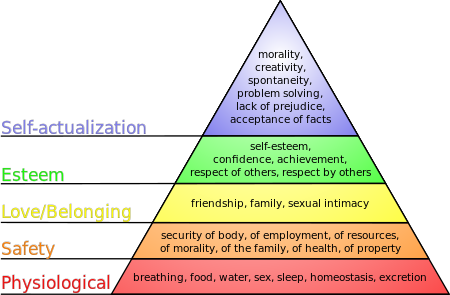
I first read Krishnamurti's book in the beginning of my college years, and kept it with me because I knew it would be important down the road. It's that kind of book. I don't reread books often, but I read this again recently. It has helped me consider what I knew was essential, but ignored due to life's myriad distractions and proscriptions. So in the order of Maslow's hierarchy of needs, I would recommend Essentialism first, to provide the basis of available time and stability. As you begin to carve out time for moving up the triangle, I would suggest Think on These Things, to consider that which may seem very philosophical at first, but in fact is entirely practical.


I hope this provided a decent introduction of this blog, and of these transformative materials to you. If you've read either of these items, I'd like to hear your views on them. If you haven't read them yet, I'm curious about your opinion too! Click the links to find out more or purchase. Are you interested in either of these? Are you uncertain of them? Do you not have time for either book? Please let me know in the comments!